
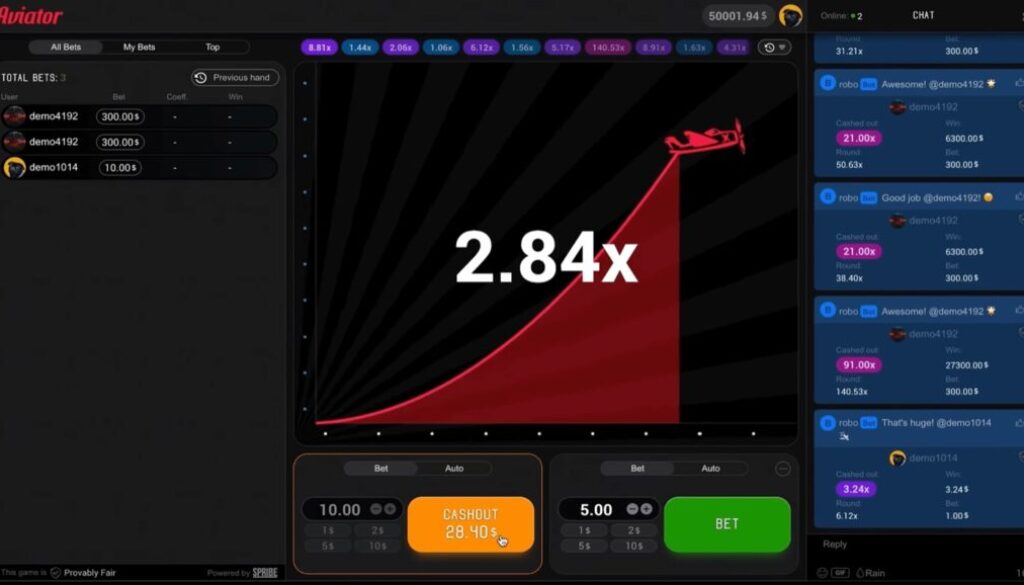
Aviator and the 3% House Edge Explained
Aviator is a crash game by Spribe. It launched in early 2019, and its first live release appeared on Adjarabet in February 2019. The game shows a multiplier that rises while a plane remains in flight. The round can crash at any point.
The central number is 3%. Spribe gives Aviator a 97% RTP, which means the expected return is 97% of the stake over a large number of comparable bets. The remaining 3% is the house edge. This article explains where that edge sits, how expected value works, and why no betting system removes it.
Where The Edge Sits
Aviator has an RTP of 97%. Spribe sets the mathematical house edge at 3%.
The edge applies to the round outcome, not to a specific cash-out button. A player chooses a stake and may cash out before the plane crashes. The selected multiplier changes the chance of a successful cash-out, but it does not change the long-term expected loss from the stake.
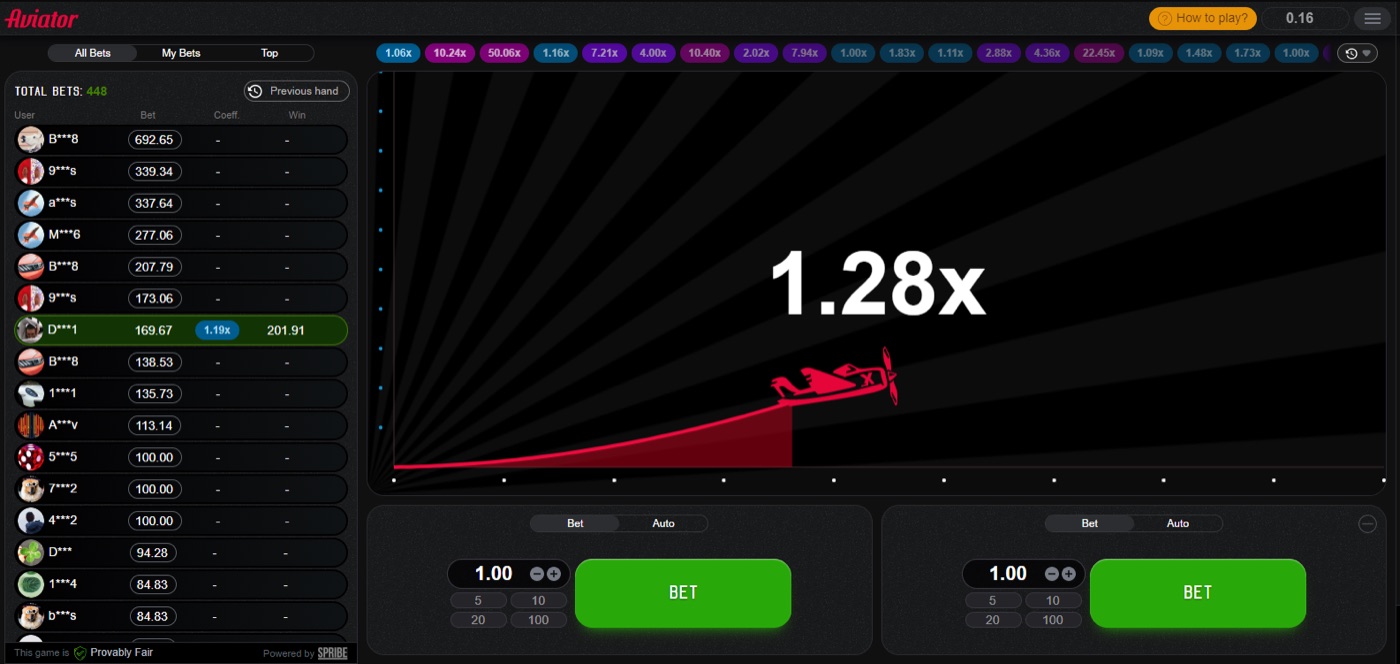
The Aviator plane rises while the round multiplier increases.
For example, a $10 stake has an expected loss of $0.30 under the 3% house edge. A $50 stake has an expected loss of $1.50. These are averages, not guaranteed results from one round.
- A $10 stake has an expected value of -$0.30.
- A $20 stake has an expected value of -$0.60.
- A $100 stake has an expected value of -$3.00.
The wording matters. A negative expected value does not mean every player loses 3% on every round. One round can produce a win, a large win, or an instant crash at 1.00x. The 3% figure describes the mathematical average across many rounds.
Aviator is not a slot and has no bonus round. Spribe describes it as a social multiplayer game made of an increasing curve that can crash at any time. The edge belongs to this crash-game model.
Probability And Expected Value
Aviator uses the probability formula 0.97 divided by the target multiplier. A 2x target therefore has a stated probability of 48.5%.
A cash-out target combines two values: the chance of reaching the target and the payout if the target is reached. The product produces the same 97% return before the stake is considered.
| Cash-out target | Probability of reaching it | Expected return from $10 |
|---|---|---|
| 1.2x | 80.8% | $9.70 |
| 1.5x | 64.7% | $9.70 |
| 2x | 48.5% | $9.70 |
| 3x | 32.3% | $9.70 |
| 5x | 19.4% | $9.70 |
| 10x | 9.7% | $9.70 |
The table shows why a lower target does not create a positive edge. At 1.5x, the probability is higher, but the win is smaller. At 5x, the probability is lower, but the win is larger. The expected return remains 97% of the original stake.
- A $10 stake cashed at 2x returns $20 when the round reaches 2x.
- The chance of reaching 2x is 48.5%.
- The mathematical return is $20 multiplied by 48.5%, or $9.70.
- The expected result is therefore a $0.30 loss against the original $10 stake.
About 3% of rounds crash instantly at 1.00x. That is roughly one round in 33. This does not mean every 33rd round must crash instantly. Independent rounds do not follow a fixed schedule.
The same calculation applies at higher targets. A 10x target has a 9.7% chance of being reached. A 100x target has a 0.97% chance. The potential return changes, but the stated expected return remains 97%.
Systems Change Variance
Aviator rounds last about 8 to 30 seconds. The game produces about 60 to 90 rounds per hour.
Those numbers create many chances to repeat a decision, but repetition does not change the 3% edge. A system can alter when a player wins or loses, how often the balance moves, and how large the swings become. It cannot change the expected value of each stake.
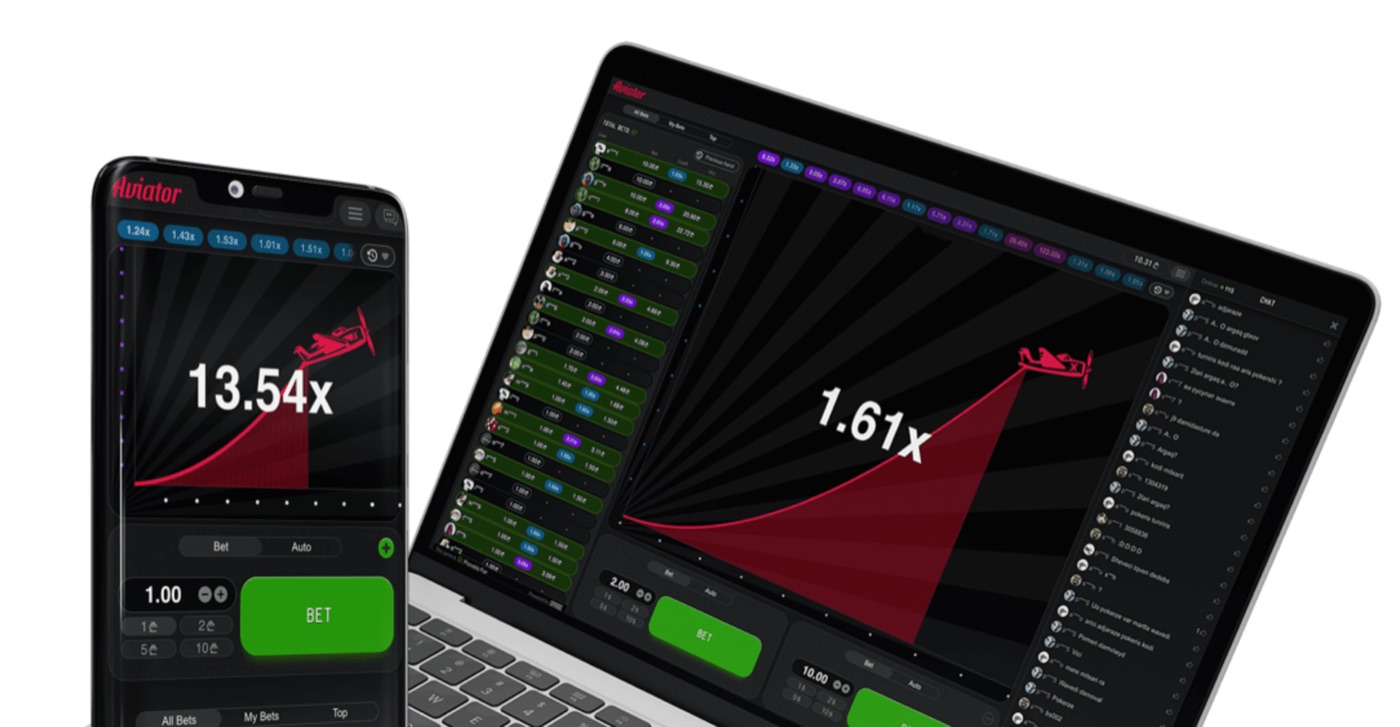
Aviator displays different round multipliers across a phone and laptop view.
Common approaches include automatic cash-out, split bets, and progressive staking. Guides often discuss cashing out around 1.5x to 2x, splitting one round between a lower target and a higher target, or using targets from 5x to 50x. These choices affect variance only.
- Auto cash-out can end a bet at a preset multiplier.
- A split bet can use two separate cash-out targets.
- A higher target produces less frequent successful cash-outs.
- A lower target produces more frequent successful cash-outs but smaller wins.
- A stop-on-loss rule can limit the amount used in a session.
Martingale makes the point clearly. The method doubles the stake after each loss. After 10 losses, the next stake reaches 1,024 times the base stake. The system does not recover the house edge. It increases exposure to a long losing sequence and to the operator’s stake or win limits, which depend on the operator.
Fibonacci and D’Alembert systems have the same mathematical problem. They change stake size after results. They do not change the probability formula or the 97% RTP.
Patterns do not create an advantage either. Previous multipliers sit in the round history, but rounds are independent. Graph analysis, a “best time to play”, or a strategy chart PDF cannot alter the next round’s stated probabilities.
A player should set a loss limit before playing and avoid staking money needed for other expenses. Demo mode exists without registration, so the interface can be examined without a real-money stake.
A player researching a crash game, its multiplier, and the cash-out process may also encounter aviator betway ghana login while comparing gambling pages. That reference does not change the RTP or the 3% house edge.
Fairness And Cash-Outs
Aviator publishes a SHA-256 hash of the server seed before each round. The crash point is fixed before take-off.
Player client seeds are combined with the server seed, and the inputs are revealed after the round. The verification tool inside the game allows the result to be checked.
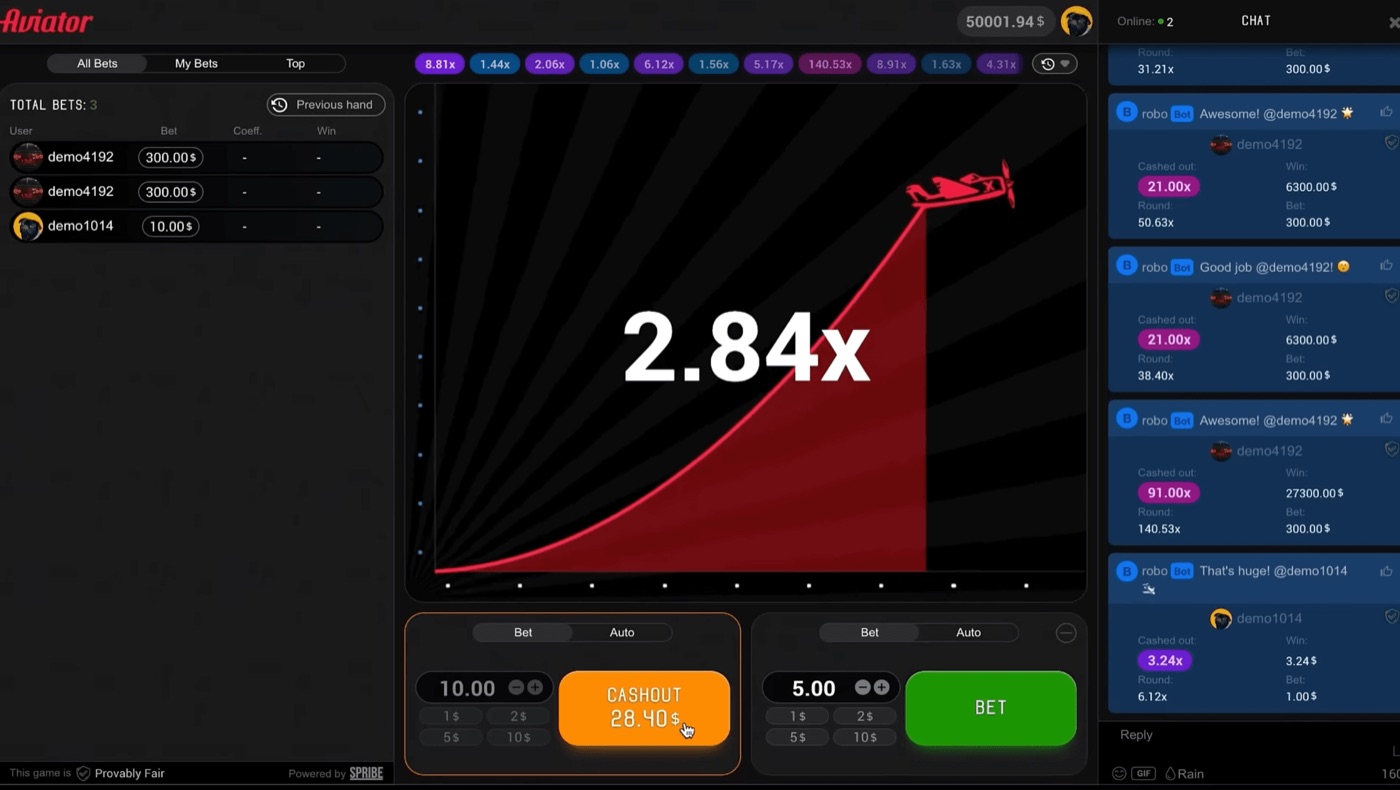
The interface shows live bets, chat and a cash-out displayed at 28.40x.
This process is called provably fair. Neither the operator nor Spribe can change a result after the round starts. The hash does not remove the house edge. It explains how the predetermined crash point can be checked.
- The server publishes a SHA-256 hash before the round.
- Client seeds from players are combined with the server seed.
- The crash point is fixed before the plane takes off.
- The inputs become available after the round.
- The in-game verification tool checks the result.
Cash-out timing is a separate issue. A cash-out request must reach the server before the crash. A time-out can result from latency or a slow device, rather than from a changed crash point.
The interface includes a Provably Fair badge and a round-history display. Those features help players review rounds. They do not predict the next multiplier.
The same distinction applies to predictor applications and signal bots. Prediction is impossible because the crash point is committed by hash before the round. Public maths sold through Telegram cannot turn a negative expected value into a positive one.
Controls And Staking
Aviator provides two bet panels in each round. Each panel can use a separate cash-out.
The game also includes Bet and Auto tabs, an Auto Cash-Out setting, and Auto Bet or Auto Play for 10 to 100 rounds. These are control tools, not methods for removing the edge.
- Bet places a manual stake for the round.
- Auto Cash-Out uses a preset multiplier.
- Auto Bet repeats stakes for a selected number of rounds.
- Auto Play can use stop-on-win and stop-on-loss settings.
- Two panels allow separate cash-out choices.
The live bets panel shows All Bets, My Bets, and Top results. Top results can display daily, monthly, and all-time wins. The in-game chat also shows social activity, including operator-announced promotions.
Quick-stake buttons make common amounts easier to select. Typical stakes range from about $0.10 to $100 per bet, but the available range depends on the operator. Win caps per round also depend on the operator.
A cash-out target still carries the same expected value. Suppose a player divides $10 into two $5 bets. One bet may use 1.5x and the other 5x. The split changes the shape of possible results. It does not change the expected return of the combined $10 stake.
Automatic play can also increase the number of rounds played. More rounds mean more total stake turnover, so the expected loss in money terms rises with the amount wagered. A 3% edge applied to $1,000 of total stakes is an expected loss of $30, regardless of how the $1,000 is divided.
Free bets or Rain features do not change the ordinary cash-out mathematics of a real-money stake. Rain Promo places free bets in chat, and operators may grant Free Bets individually, in batches, or through an API. The availability and terms depend on the operator.
Aviator FAQ
Aviator has a 97% RTP across its stated crash-game mathematics. Spribe describes the game as a curve that can crash at any time.
The following answers focus on the 3% edge, expected value, and the limits of betting systems.
What is Aviator’s house edge?
Aviator’s house edge is 3%. Its RTP is 97%, so the expected return is $97 for every $100 staked over a large number of comparable bets. This does not predict the result of one round.
Does a 2x cash-out beat the house edge?
No. The probability of reaching 2x is 48.5%. A $10 stake has a $9.70 expected return at that target, producing an expected loss of $0.30. The target changes variance, not the 3% edge.
Can an Aviator predictor find the next crash point?
No. The crash point is fixed before take-off and committed through the server-seed hash. Predictor apps, signal bots, patterns, and graph analysis cannot identify the next result.
Does Martingale remove the 3% edge?
No. Martingale changes the stake after a loss. After 10 losses, the next stake reaches 1,024 times the base stake. The method increases exposure but leaves the RTP at 97%.
Why can a cash-out time out?
The request must reach the server before the crash. Latency or a slow device can cause a time-out. A time-out does not provide evidence that the predetermined crash point changed.
Can Aviator be played without real money?
Demo mode exists and needs no registration. It allows the interface to be used without a real-money stake. Demo play does not alter the 3% house edge applied to real-money betting.