
Aviator Maximum Multipliers Explained
Aviator is a crash game by Spribe that uses an increasing multiplier and a plane that can disappear at any moment. The central question is not only how high the multiplier can climb, but also whether Spribe publishes a maximum and whether an operator limits the amount that can be won.
This guide explains the multiplier mechanism, the 0.97/m probability model, operator win caps, the meaning of a very high multiplier, and the limits of prediction. It also separates the game’s mathematical ceiling from the cash-out limit applied by a bookmaker.
How Aviator Multipliers Work
Aviator launched in early 2019, and Spribe describes it as a social multiplayer game built around an increasing curve that can crash at any time. Each round fixes its crash point before take-off, so the multiplier does not keep rising until a player decides to stop.
The multiplier begins at 1.00x and increases while the plane remains in flight. A player must cash out before the crash to receive the displayed multiplier multiplied by the stake.
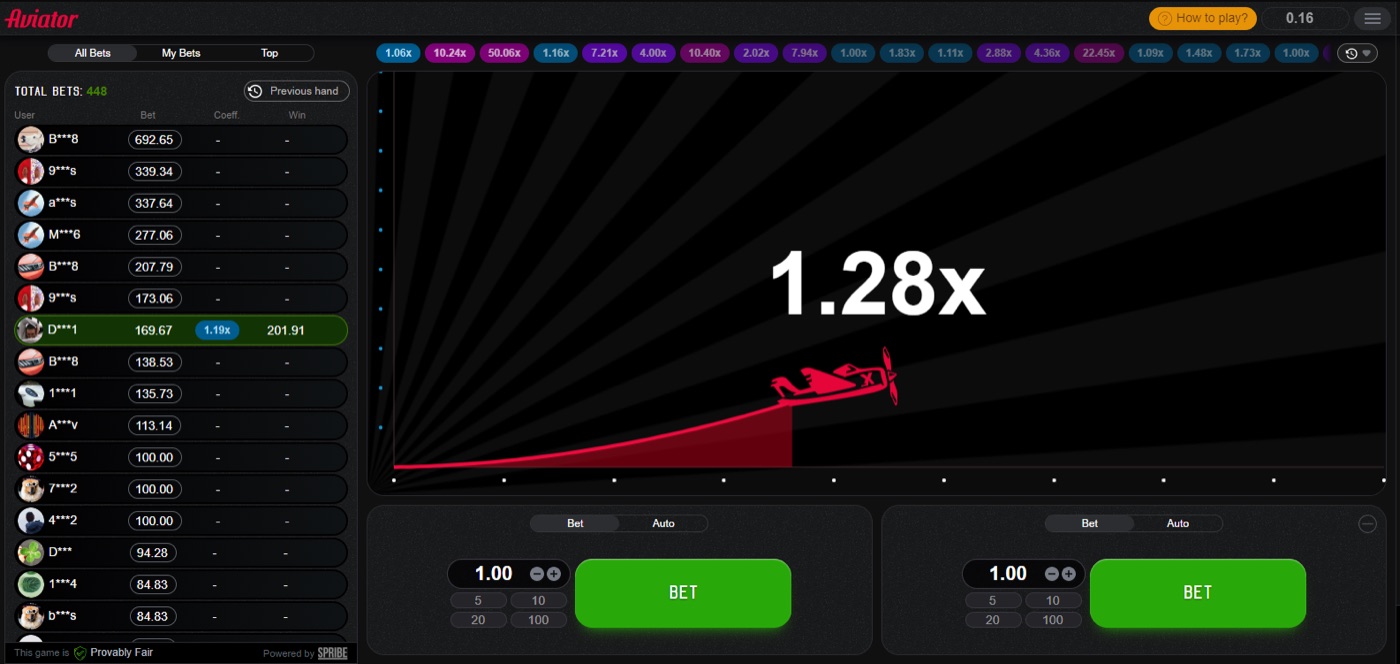
The plane remains in flight while the Aviator multiplier rises before the crash point.
A cash-out request only succeeds if it reaches the server before the crash. A slow device or connection can cause a time-out, but the request cannot collect a result after the crash has already occurred.
- A player selects a stake before the round starts.
- The multiplier rises while the plane remains visible.
- The player cashes out at the displayed value or uses Auto Cash-Out.
- The round ends when the fixed crash point is reached.
Aviator provides two bet panels per round. Each panel can have a separate stake and cash-out, which allows a player to close one position while leaving another open.
The game is not a slot and has no bonus round. Its main result is the crash point, while features such as chat, live bets and the round history show activity around that result rather than changing it.
The 0.97/m Probability
Aviator has an RTP of 97% and a house edge of 3%. The probability that a round reaches multiplier m is calculated as 0.97 divided by m.
This formula gives the chance of reaching a target before the crash, not a guarantee that a player will cash out at that target. The chance falls as the target rises because the divisor becomes larger.
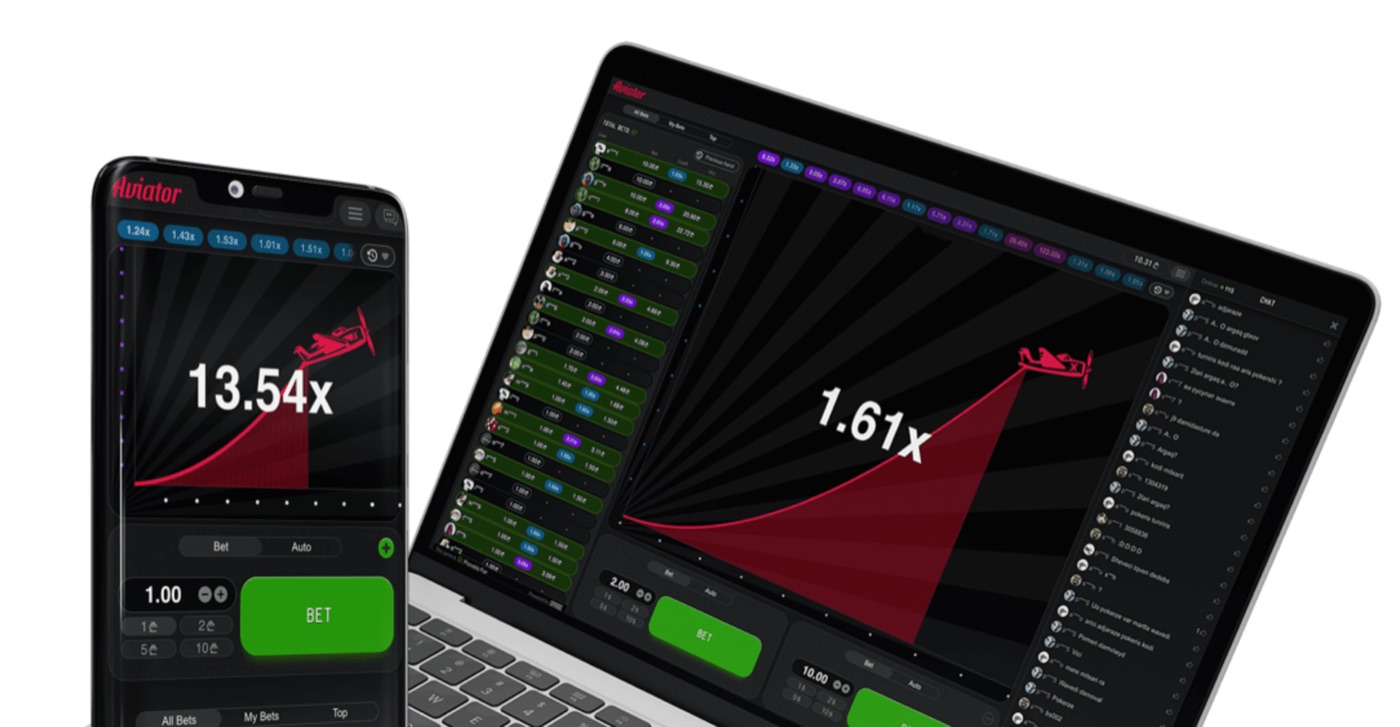
The same game interface can show different multipliers, such as 13.54x and 1.61x, on connected devices.
| Target multiplier | Approximate chance of reaching it |
|---|---|
| 1.2x | 80.8% |
| 1.5x | 64.7% |
| 2x | 48.5% |
| 3x | 32.3% |
| 5x | 19.4% |
| 10x | 9.7% |
| 20x | 4.85% |
| 50x | 1.94% |
| 100x | 0.97% |
About 3% of rounds, or roughly 1 in 33, crash instantly at 1.00x. That result can occur before the multiplier visibly moves beyond its starting value.
- A 1.5x target has an approximate 64.7% chance of being reached.
- A 5x target has an approximate 19.4% chance of being reached.
- A 10x target has an approximate 9.7% chance of being reached.
- A 100x target has an approximate 0.97% chance of being reached.
The expected value remains negative at every cash-out target. In mathematical terms, a player can change the variance by choosing a lower or higher target, but the expected loss remains 3% of the stake over time.
Spribe Has No Published Cap
Spribe does not publish a maximum Aviator multiplier. Public guides quote different maximum figures, so those figures should not be treated as a published Spribe limit.
The absence of a published cap does not mean that every operator accepts every possible payout. The game’s potential multiplier and the amount an operator will pay on one round are separate matters.
A very high multiplier is therefore possible within the game’s probability model, but the available information does not provide a Spribe-published top value. Claims about a fixed maximum need a specific source and should not be presented as a general Aviator rule.
- Spribe publishes no maximum multiplier for Aviator.
- Different guides quote different maximum figures.
- An operator can set a maximum win for one bet or one round.
- The operator’s cap can limit the payout even when the displayed multiplier is higher.
The distinction matters when a player compares the displayed multiplier with the possible cash return. A multiplier can reach a particular value while the payable win remains limited by the operator’s rules.
For example, a player checking an Aviator multiplier, cash-out rule or stake limit may encounter a bookmaker-specific restriction; the aviator betway login register wording should not be treated as evidence of a Spribe-wide maximum.
Operator Win Caps
Betway South Africa lists a maximum win of $250,000 per round for Aviator. Hollywoodbets lists a maximum win of R5 million per bet and R10 million per round.
These figures demonstrate why the operator matters when assessing a maximum payout. A player’s stake, the multiplier, the per-bet cap and the per-round cap can all affect the amount paid.

Hollywoodbets reported an R10 million Aviator win at 3571.42x on 10 April 2024.
Hollywoodbets reported an R10,000,000 result on 10 April 2024 from two bets. One bet was R1,400 at 3571.42x and the other was R1,600 at 3125x.
The reported event shows that a large multiplier and a round win cap can appear together. It does not establish a maximum multiplier for all operators, and it does not mean that every player can receive the same payout.
- Betway South Africa lists a $250,000 maximum win per round.
- Hollywoodbets lists R5 million per bet.
- Hollywoodbets lists R10 million per round.
- Other stake and win values depend on the operator.
Typical stakes range from about $0.10 to $100 per bet, but the available range depends on the operator. A higher stake does not change the probability of reaching a multiplier because the formula is based on the target value, not the stake size.
An operator’s rules may also distinguish between a maximum per bet and a maximum for all bets in one round. Players need to read both limits when two bet panels are used at the same time.
Fairness And Prediction Limits
Aviator uses a SHA-256 server-seed hash before each round. The crash point is fixed before take-off after the server seed and player client seeds are combined.
After the round, the inputs are revealed and can be checked with the verification tool inside the game. Neither Spribe nor the operator can change the result after the round starts.
This process is called provably fair because the published hash allows the later result to be checked against the earlier commitment. It does not make every target equally likely, since the 0.97/m formula still applies.
- The server publishes a SHA-256 hash of the server seed.
- Player client seeds are combined with the server seed.
- The crash point is fixed before the plane takes off.
- The inputs become available for checking after the round.
Prediction apps cannot calculate a future crash point from the public information before the round. Third-party apps using names such as “Aviator Predictor” are clones or promotional products, and Telegram signal bots resell public mathematics.
There is no standalone official Aviator app from Spribe. Aviator runs inside an operator’s website or app, while third-party predictor apps may contain virtual coins, advertisements or disclaimers that their coins have no real value.
Rounds are independent. Previous multipliers, graph patterns, a strategy chart PDF, a best time to play and off-peak hours do not change the odds.
Targets, Stakes And Variance
Aviator rounds last about 8 to 30 seconds, with roughly 60 to 90 rounds per hour. The game is high variance, so a sequence of short rounds or a rare high multiplier can produce large swings.
Auto Cash-Out can close a bet at a preset multiplier, while Auto Bet and Auto Play can run from 10 to 100 rounds. These controls automate instructions but do not improve the 3% house edge.
- Some guides use Auto Cash-Out targets from 1.5x to 2x.
- Some guides split two bets, with one cashing out at 1.5x to 2x and one targeting 5x to 10x.
- Targets from 5x to 50x are described as realistic long targets in strategy guides.
- A common guide recommendation is to risk no more than 2% of a bankroll per round.
Those approaches change how often a player wins and loses, but they do not remove the house edge. A lower target can produce more frequent successful cash-outs while offering a smaller return per successful stake.
Martingale systems double the stake after each loss. Ten losses take the next stake to 1,024 times the base stake, which is why guides warn against the method. Fibonacci and D’Alembert systems also do not beat the 3% edge.
- Set a stake before the round rather than increasing it after a loss.
- Set a loss limit and a win limit.
- Use demo mode to understand the controls without registration.
- Stop when the chosen limit is reached.
Only gamble with money you can afford to lose. The demo mode is available through an operator demo or demo.spribe.io and does not require registration.
Aviator FAQ
Aviator launched in early 2019, and its first live launch was on Adjarabet in February 2019. Spribe released Aviator 2.0 on 15 August 2019.
The game uses an increasing multiplier, a fixed crash point and an RTP of 97%. Its maximum multiplier is not published by Spribe, while payout caps depend on the operator.
What is the Aviator maximum multiplier?
Spribe has not published a maximum Aviator multiplier. Guides quote different figures, so no single top multiplier should be treated as the general Spribe limit.
Why does the multiplier stop suddenly?
The crash point is fixed before the round starts. When the rising multiplier reaches that point, the plane disappears and bets that have not been cashed out lose.
What does 0.97/m mean?
It is the probability model for reaching multiplier m. For example, a 10x target has a 0.97 divided by 10 probability, shown as approximately 9.7%.
Can an operator cap an Aviator win?
Yes. Win caps are set by each operator. Betway South Africa lists a $250,000 maximum win per round, while Hollywoodbets lists R5 million per bet and R10 million per round.
Can an app predict the next Aviator crash?
No prediction app can determine the next crash point from the available public information. The result is committed by a hash before take-off, and previous rounds do not change the independent odds of the next round.